
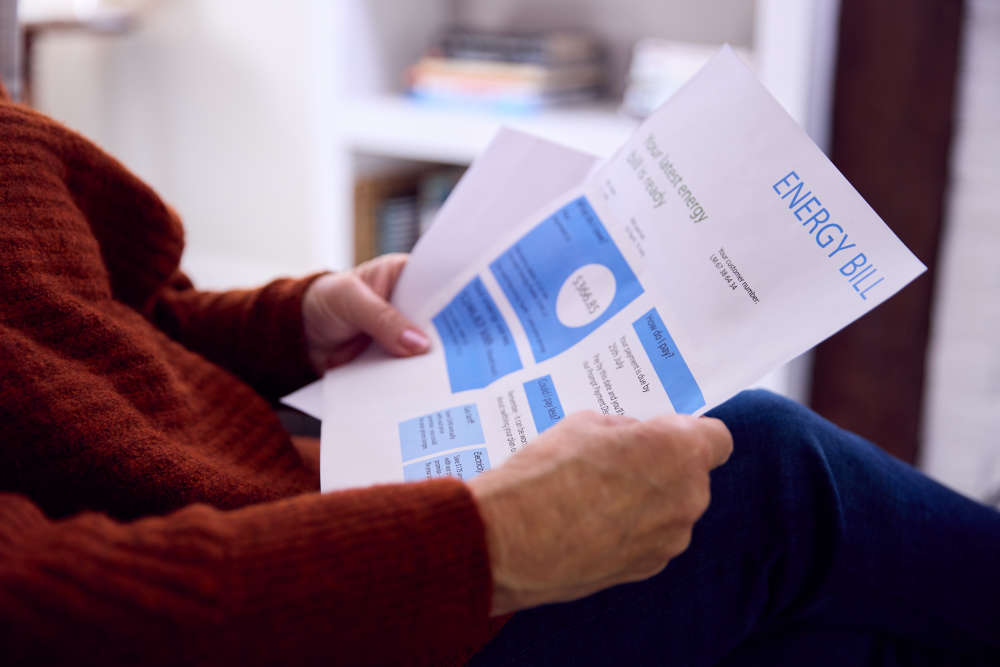
The Jersey Consumer Council is increasingly hearing from Islanders who are concerned about estimated energy bills and the problems they can cause if left unchecked. One recent case highlights why it is so important for consumers to understand how estimated bills work, and what steps can be taken to avoid unexpected costs in the future.
An elderly Islander contacted us after receiving several consecutive gas bills from Island Energy based on estimated readings rather than an actual meter reading. When he queried this, he was told that the company no longer always has the capacity to read all meters within each quarterly billing period.
We contacted Island Energy about this case, and a representative said the following: “I’m fully confident we will read the customer’s meter for future billing periods. But there may be times where we do have to estimate. If an invoice is estimated, it clearly states on the front of the statement. This is one of the changes made on the new bill format, where previously an estimated read would only show on the reverse of each statement, we are now making it more noticeable for the customer to indicate an estimated meter reading.
“If we do estimate a billing period and the meter read differs by ten or more units, customers can submit their meter reading on our website via this link (Submit your Island Energy meter reading) and we will generate a new bill for the customer.”
However, our worried consumer gave the following response: “It is all very well for Island Energy to suggest that customers can submit a reading 'online', but I would like to point out that I am in my eighties and, apart from the difficulty and inconvenience of having to take and submit a reading personally, the fact that we have a meter should allow for readings to be accurately taken by Island Energy and then the bill submitted to the consumer promptly.”
This situation is understandably worrying, particularly for people on fixed incomes who budget carefully from quarter to quarter. While estimated bills are intended to smooth payments, they can have the opposite effect if estimates are lower than actual usage. When the meter is eventually read, the customer may face a large catch‑up bill covering energy used over several months, especially if it includes winter months.
Many older Islanders remember a time when quarterly meter readings were the norm and bills reflected actual usage each time. For those consumers, the shift to estimated billing can feel like a step backwards and can undermine confidence in the accuracy of their accounts. It also places more responsibility on customers to ensure that bills reflect what they have actually used.
The gentleman who emailed us added the following: “All I would like is an accurate quarterly reading for which I can pay the amount due, as in fact used to be the case for the many years with Jersey Gas.”
Our advice
We recognise that not all Islanders have easy access to a computer or feel confident using online services. However, submitting a meter reading does not have to be done online, you can submit by telephone, and, in some cases, readings can be submitted by post. Taking a few minutes to read your meter and pass on the figures can help ensure that your bill is accurate and avoid unpleasant surprises later on.
Estimated bills are not necessarily wrong, but they are only as good as the assumptions behind them. Changes in weather, household circumstances or appliance use can all mean that actual consumption differs significantly from an estimate. This is particularly relevant during colder months, when gas usage can increase sharply.
The Jersey Consumer Council encourages all Islanders, where possible, to check whether their bill is based on an estimate and to submit a meter reading if they can. If you receive a bill that you believe is inaccurate, you should contact your energy provider promptly to query it and keep a record of all correspondence. If you are unable to resolve the issue directly, the Jersey Consumer Council can offer guidance on the next steps.
Accurate billing helps consumers manage their finances and gives confidence that they are paying only for the energy they have used. While not everyone is able to submit readings themselves, awareness of the issue is an important first step in avoiding unexpected and potentially distressing bills in the future.
If you would like help understanding your energy bill or submitting a complaint, you are welcome to contact us.
 Helping families to make informed choices this Easter holiday
 Temporary gas price increase
 Tips to reduce your fuel consumption and get the best prices
 Travel guidance for the Middle East
 World Consumer Rights Day – Know your rights and shop with confidence
 Shop smart this Easter: Compare before you buy