
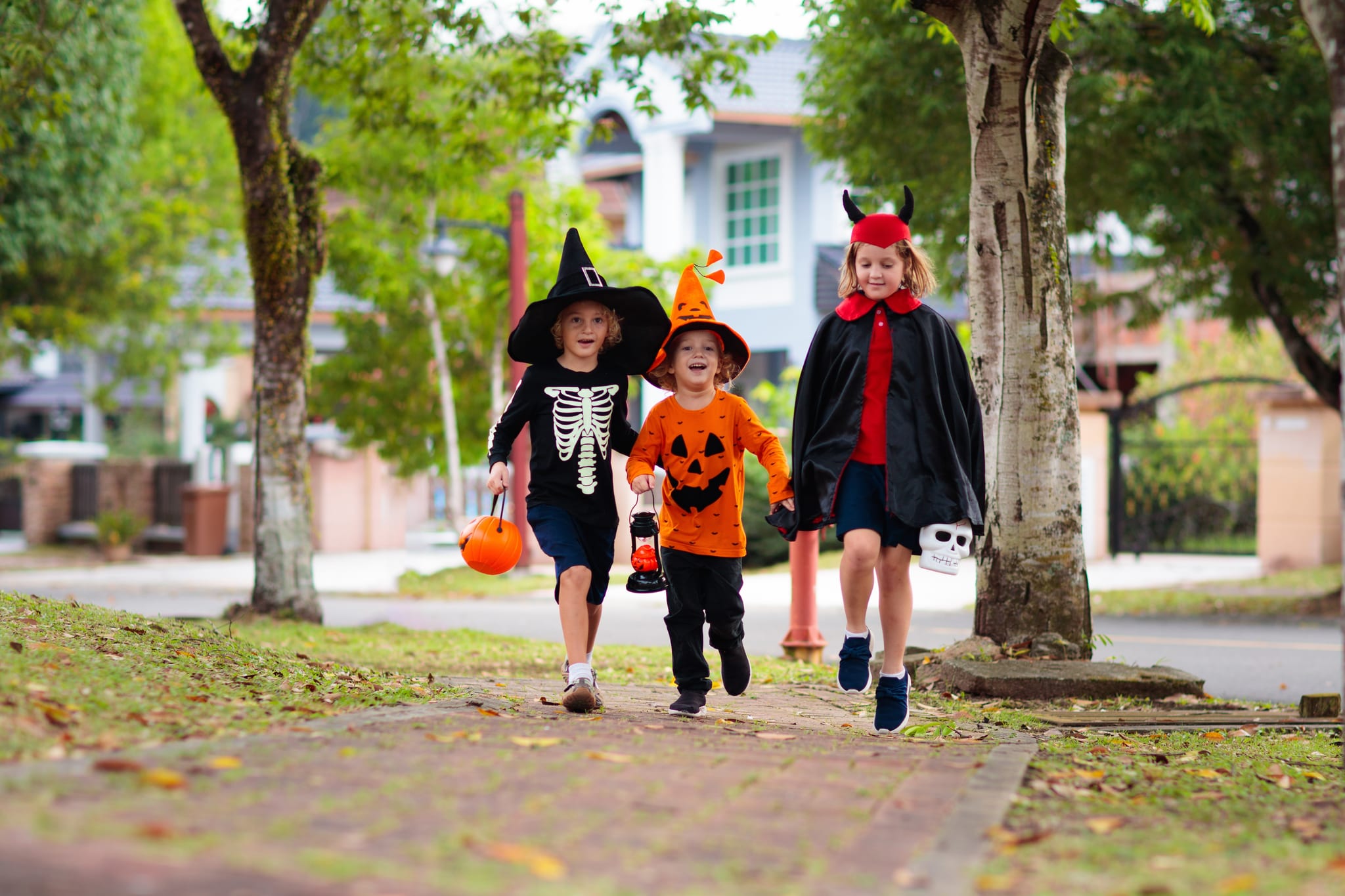
With just a fortnight to go until Halloween, pumpkins, tubs of sweets, and spooky items have been appearing in the shops in recent weeks. If you’re planning on taking your children trick or treating, or will be hosting or attending a party, then you may be planning on buying Halloween costumes, hats, masks and other accessories for yourself or your family members.
Whilst it may seem like harmless fun, Halloween products are often cheap, made quickly and worn for one night, and that can mean corners are cut on safety. A few simple checks can stop a fun evening ending in an emergency.
The fire risk
The biggest concern with any fancy dress items is flammability.
Many costumes are made from thin synthetic fabrics, with loose capes, flowing sleeves, netting, fake fur and long trailing hems. These can catch fire easily and burn quickly, and some melt onto the skin. Combine these with candles in pumpkins, sparklers or a garden fire pit, and suddenly the danger becomes very real.
Children’s fancy dress costumes are classed as toys and must meet toy safety standards, including a flammability test. However, that standard is a minimum, and costumes can still burn.
Meanwhile, adult costumes are not covered by the stricter toy rules, which can mean they are even more flammable.
If you or your children are planning on dressing up this Halloween, then here’s some advice you may want to follow:
-
Look for a label that says the costume has been tested for flammability. Some retailers use a ‘Keep away from fire’ warning or say the item meets enhanced flammability testing.
-
Choose close-fitting costumes over long, loose or floaty designs where possible.
-
Wear normal clothes underneath, such as a cotton T-shirt and leggings, rather than putting a costume straight onto bare skin.
-
Use battery-powered LED tealights in pumpkins rather than real candles.
-
Keep children well away from candles, bonfires and fireworks, even if they are only going to be in costume for a short time.
-
Teach children to ‘Stop, drop and roll’ in case their clothing catches fire.
Buying from overseas online marketplaces
The cheapest costumes and accessories are often found on large online marketplaces, where items are sold by third-party sellers, many of which are based outside the UK and Europe.
The prices may be tempting, but there are risks:
-
Products sold this way may not have been tested to UK or European safety standards, and testing by industry bodies and regulators has repeatedly found unsafe toys sold through these sites.
-
Photographs may not match what arrives, and the listing may show safety marks the product does not actually meet.
-
If something goes wrong, it can be very difficult to get a refund or hold the seller responsible. Returning an item abroad can cost more than you paid for it.
-
Islanders may also face delivery charges, delays and import GST, which can wipe out the saving.
If you do buy online, check who the seller actually is and where they are based. Read the reviews, especially any that mention quality or safety problems, and be wary of very low prices from unknown sellers.
Buying from an established retailer, whether in the Island or a well-known UK shop, gives you clearer consumer rights and a business you can go back to.
What safety markings mean
You will often see markings on toys and costumes. These are what to look for:
-
UKCA or CE mark: Shows the manufacturer claims the product meets the relevant safety rules. It is a self-declaration rather than an independent guarantee, and it can be faked, so treat it as the minimum you should expect rather than proof of safety.
-
Lion Mark: Used by members of the British Toy and Hobby Association, who sign up to a code of practice. It’s a useful sign that the toy comes from a recognised maker.
-
Age warnings: Take these seriously. ‘Not suitable for children under 36 months’ usually means there are small parts that could be a choking hazard.
Be suspicious if a product has no markings, no instructions, no manufacturer’s name or address, or labels with poor spelling and English.
Other hazards to watch out for
-
Light-up toys and accessories: Check the battery compartment is secured with a screw. Button batteries can cause serious internal injuries within hours if swallowed.
-
Masks: Make sure children can see clearly and breathe easily. Face paint is often a safer choice, but test it on a small patch of skin first.
-
Coloured or novelty contact lenses: Avoid lenses that haven’t been fitted by an optician. Badly fitting lenses can damage eyes.
-
Glow sticks: The liquid inside can irritate skin and eyes, so make sure children don’t chew or break them.
-
Fake weapons: Choose soft, flexible props without sharp points or edges.
-
Being seen: Dark costumes on dark autumn evenings make children hard for drivers to spot. Add reflective strips or give them a torch.
If something goes wrong
If you buy a costume or toy that seems unsafe, stop using it and contact the retailer.
Report dangerous products to Trading Standards so they can investigate and protect other families. Keep the packaging, receipt and any photographs.
Halloween should be about treats, not trips to A&E. A few minutes checking labels and choosing carefully could make all the difference.
 Spreading the cost of Christmas: why now is the time to start
 Autumn money check-up: Ten things to review before winter
 The September price check: are you really getting a bargain?