
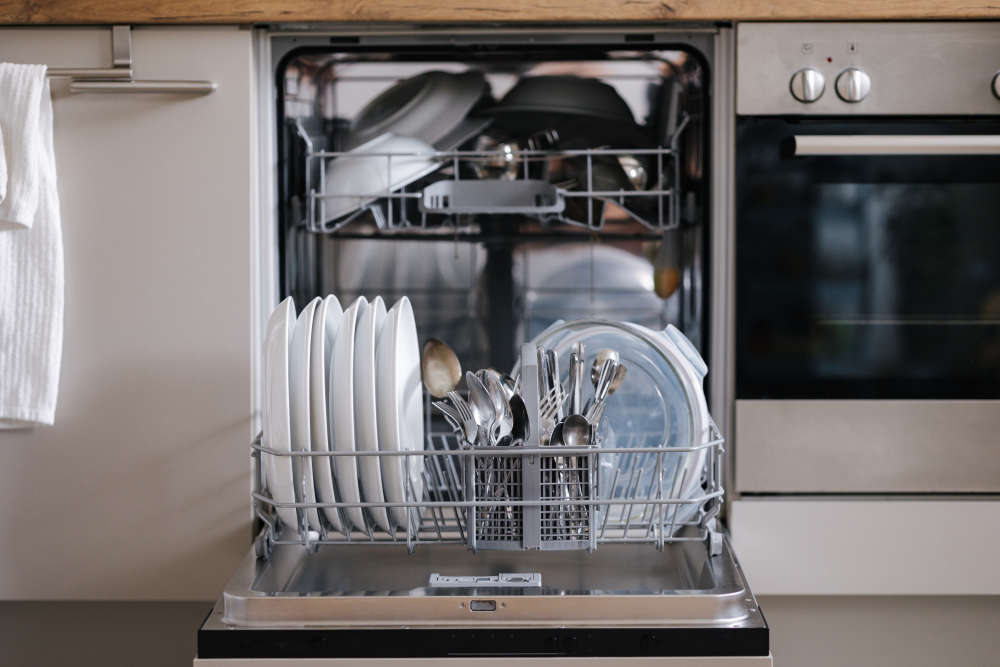
With the cost of utilities continuing to be a concern for many households, it is understandable that Islanders want to make informed choices about how they use water and energy at home. One common question is whether it is more efficient to use a dishwasher or to wash up by hand.
Despite a long-standing perception that hand washing uses less water, the evidence suggests the opposite is usually true.
Modern dishwashers are designed to use water very efficiently. A typical machine will use somewhere in the region of 9 to 13 litres of water for a full cycle, with eco settings reducing this further. By comparison, washing the same number of dishes by hand can use significantly more – often between 30 and 60 litres, particularly when a tap is left running.
Research has also demonstrated that dishwashers can use up to 80% less water than hand washing when cleaning a full load.
The reason for this difference lies in how dishwashers operate. Rather than constantly drawing fresh water, they reuse and filter the same water throughout the cycle, directing it precisely where it is needed. This allows them to clean efficiently without requiring large volumes of water.
By contrast, washing up by hand often involves running taps, rinsing items individually, or refilling the sink more than once. Even relatively small habits, such as rinsing plates under a running tap, can quickly increase overall water use.
There are situations where careful hand washing can be relatively efficient – for example, when only a small number of items are being cleaned using a single bowl of water. However, in day-to-day use, this level of control is difficult to maintain, and water use tends to be higher in practice.
Energy use is also worth considering. Dishwashers are generally designed to heat water efficiently, and when run on an eco-setting with a full load, they can be a cost-effective option overall. However, running a dishwasher when it is only partially full reduces these benefits.
For most households, the conclusion is straightforward. Used properly, a dishwasher is typically the more efficient option, both in terms of water and, in many cases, energy. However, the key is not just in having the appliance, but in how it is used.
Top tips to make your dishwasher work efficiently
Using a dishwasher efficiently is about more than simply switching it on. Small changes in how it is loaded, maintained and used can make a real difference to water use, energy efficiency and cleaning performance.
- Load items carefully
Place larger items such as plates, bowls and pans on the lower rack, facing towards the spray. Lighter items such as glasses and cups should go on the upper rack, positioned so water can drain away easily. Cutlery should be spaced out to prevent items sticking together.
- Avoid overloading
It is important that water can circulate freely. Overfilling the machine, or placing items where they block the spray arms, can prevent dishes from being cleaned properly and may mean they need to be washed again.
- Don’t pre-wash under the tap
Many people now rinse or wash dishes before putting them in the dishwasher, sometimes using hot water. This not only wastes water (and money), it can actually reduce cleaning performance. Modern dishwashers and detergents are designed to deal with food residue, and the detergent needs something to ‘grip’ onto. Simply scraping off excess food is usually enough.
- Wait for a full load
A dishwasher uses nearly the same amount of water and energy whether it is full or not. Running it only when full is one of the simplest ways to keep it efficient.
- Use the eco setting where possible
Eco programmes tend to run for longer, but they use less water and heat the water more gradually, making them a more efficient choice for everyday use.
- Keep an eye on dishwasher salt
One of the most common issues is ignoring the salt refill indicator. Dishwasher salt is there to counteract the hardness of the water by softening it. If it is not topped up, two problems can arise. Firstly, limescale can build up inside the machine, affecting pipes and internal components and potentially leading to reduced performance or breakdown over time. Secondly, hard water makes it more difficult for detergent to work effectively, reducing cleaning performance. Jersey’s mains water is rated as slightly to moderately hard, so using dishwasher salt and responding to the refill indicator is important to keep your appliance working efficiently and to get the best results from your detergent.
- Use rinse aid for better drying
Rinse aid helps water run off dishes more easily, which reduces water spots and improves drying, particularly on glassware and plastics. While not always essential, it can improve overall performance.
- Maintain your dishwasher regularly
Cleaning the filter and checking that spray arms are clear helps the machine operate efficiently. Poor maintenance can reduce performance over time and lead to unnecessary repeat washes.
Small changes in how you use your dishwasher can make a noticeable difference helping to reduce household bills while also saving water.

 Storm-proof your home – and your insurance
 Spreading the cost of Christmas: why now is the time to start
 Autumn money check-up: Ten things to review before winter